
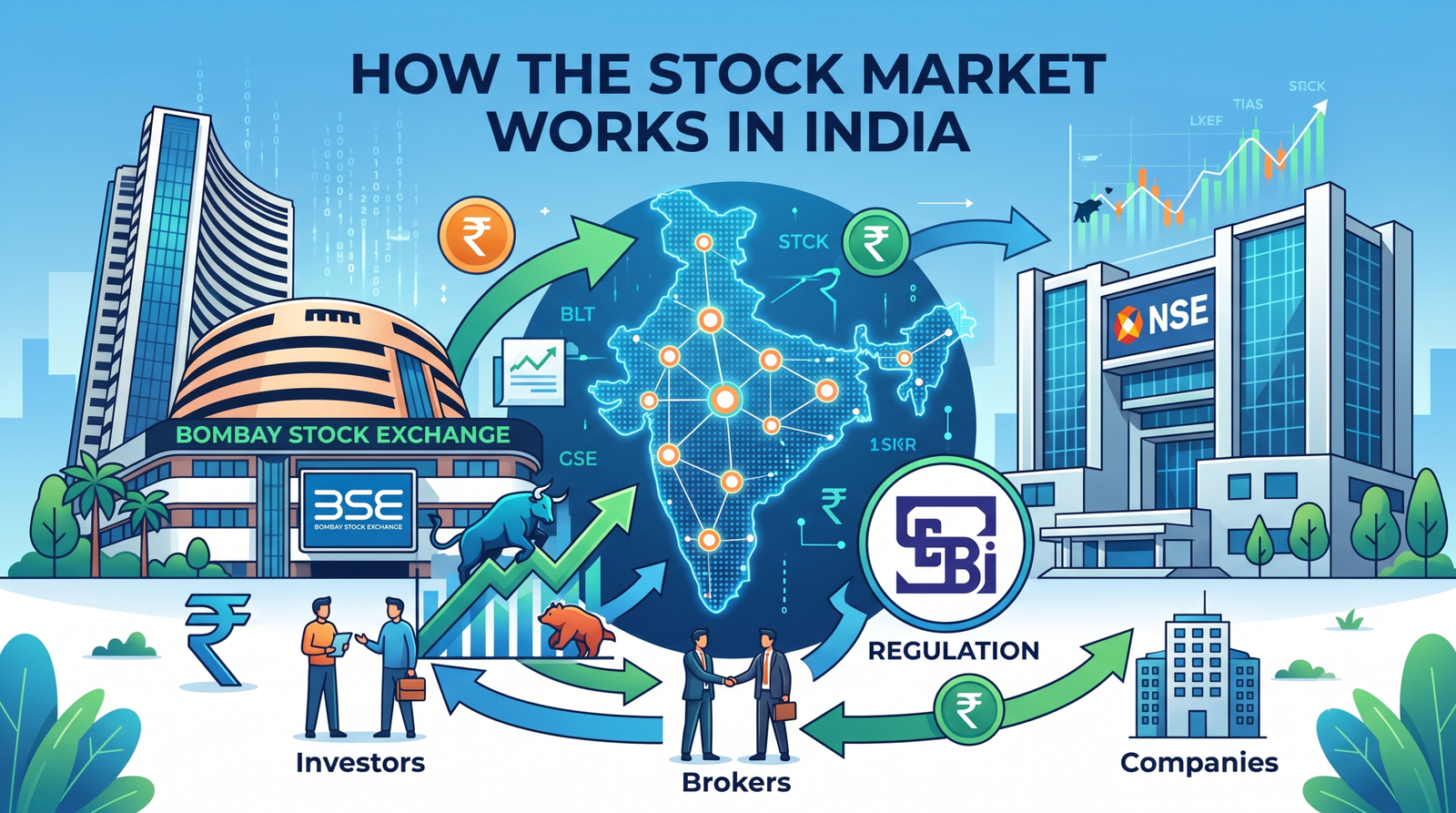
How Does the Stock Market Work in India?
The stock market in India is a regulated marketplace where people buy and sell shares of listed companies through a broker, on one of two major exchanges: the National Stock Exchange (NSE) or the Bombay Stock Exchange (BSE). Prices move every second based on supply and demand. Once you buy, the shares land in your…
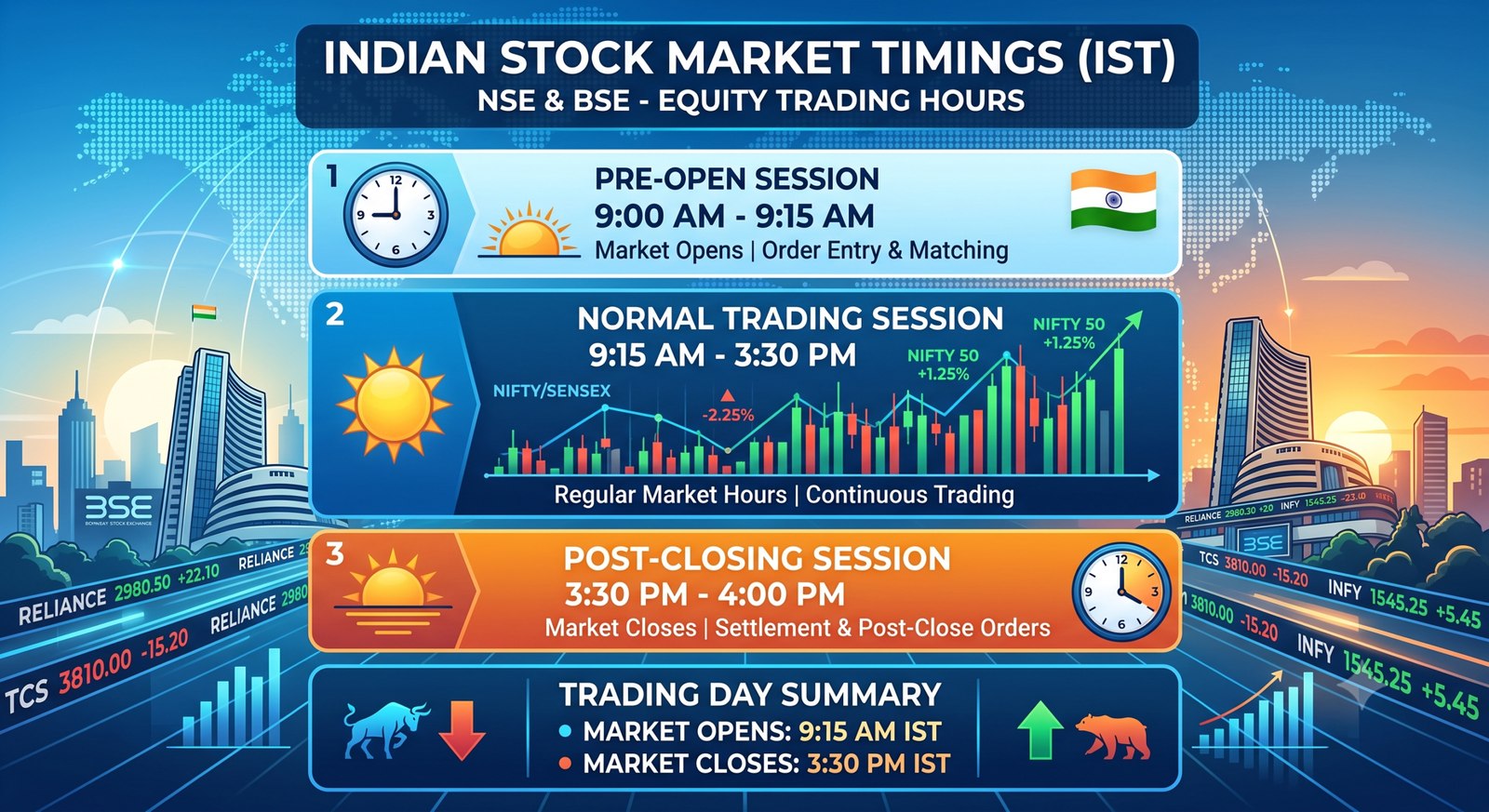
Stock Market Timings in India: Pre-Open, Normal and Post-Close Sessions
Most people know the Indian stock market “opens at 9:15 and closes at 3:30.” That’s still roughly true, but it leaves out most of what happens before and after those times. In 2026 it’s also no longer the whole story. Two big changes took effect this year. From 3 August 2026, NSE and BSE introduced…
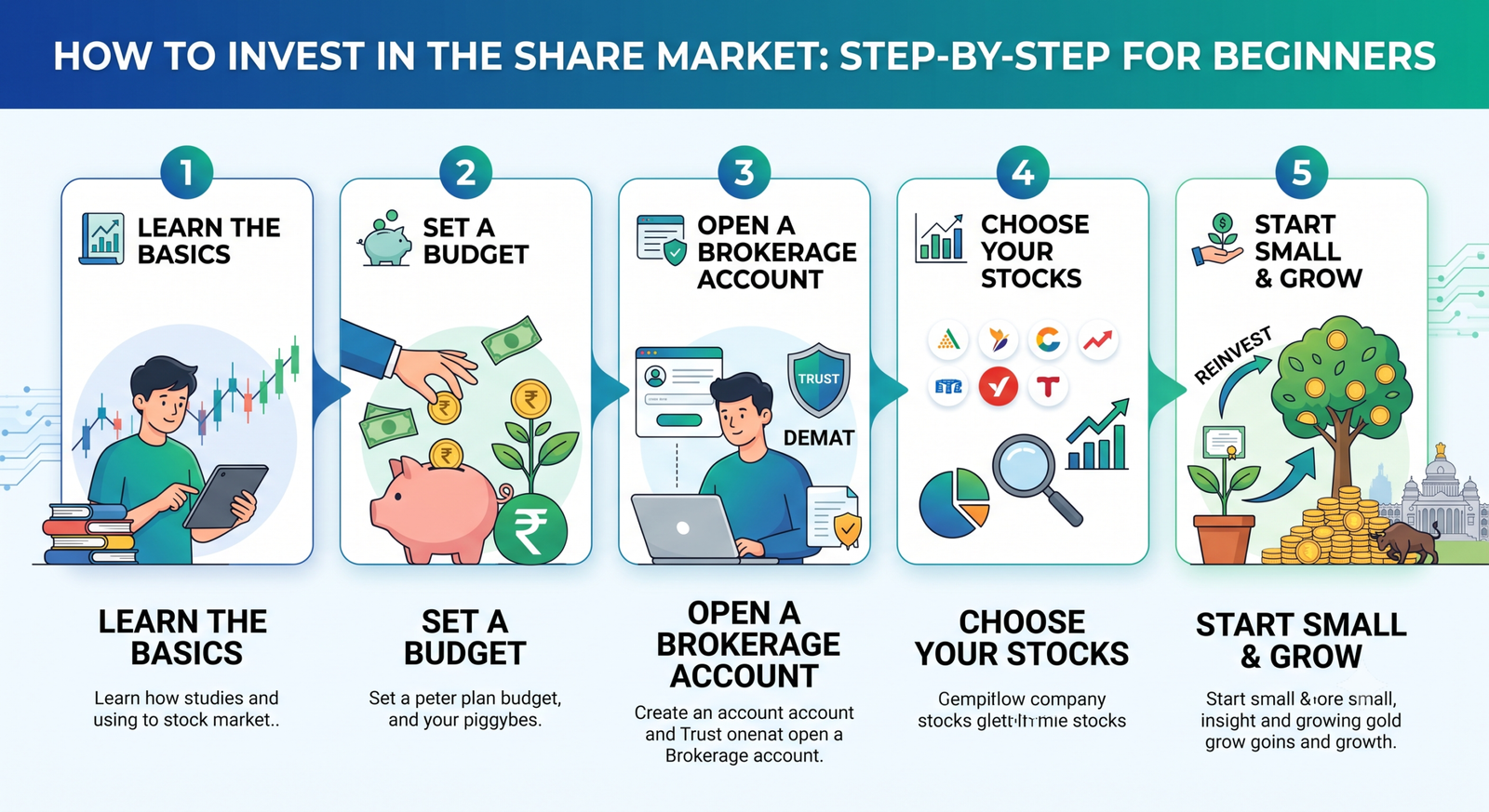
How to Invest in the Share Market: Step-by-Step for Beginners
To invest in the share market in India, you need three things: a PAN card, a bank account, and a demat plus trading account with a SEBI-registered broker. Once your KYC is approved (often within a day), you can buy your first share from a mobile app. You can start with as little as 1000…

What Is the Share Market? A Beginner's Guide for India
The share market is a regulated marketplace where people buy and sell small pieces of ownership in companies. Each piece is called a share. When you buy one share of a company like Infosys or HDFC Bank, you become a part-owner of that business, however small your stake. In India, this buying and selling happens…
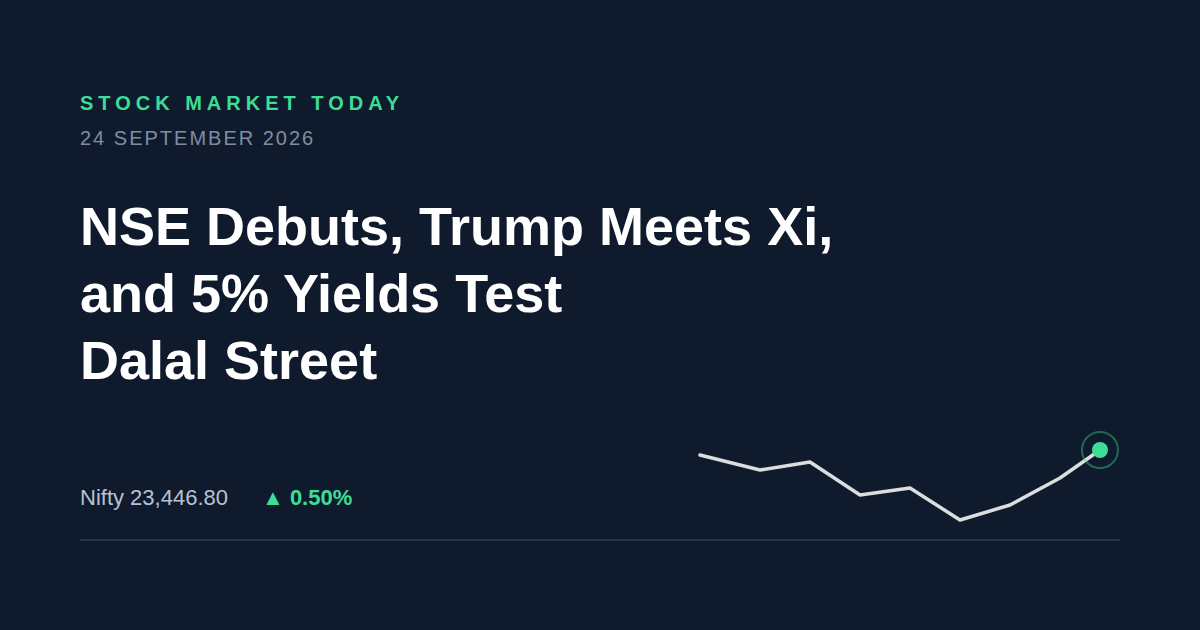
Stock Market Today (September 24, 2026): NSE Debuts, Trump Meets Xi, and 5% Yields Test Dalal Street
Thursday is one of the busiest trading days in recent months. The National Stock Exchange lists its own shares on the BSE at 10 AM. Donald Trump hosts Xi Jinping in Washington. US bond yields are close to 5%, and Wall Street fell overnight. The short version: Indian markets start today with a small cushion…
Stock Market in India: A Beginner's Guide for 2026
The stock market in India is where companies sell shares and investors buy and sell them. Most of it happens on two exchanges, the NSE and the BSE, and the regulator SEBI oversees all of it. To start, you need a PAN card, a bank account and a demat account with a registered broker. You…
Good Debt vs. Bad Debt: What’s the Difference?
Debt is not automatically good or bad. Its impact depends on the cost, repayment terms, purpose, and effect on your long-term financial position. Potentially productive debt Borrowing that supports education, a business, or an affordable home may create future value, but it still requires careful analysis. Riskier debt High-interest credit card balances and loans used…
Dollar-Cost Averaging: A Simple Investment Strategy
Dollar-cost averaging involves investing a consistent amount at regular intervals. This approach buys more shares when prices are lower and fewer when prices are higher. Potential benefits Regular contributions can create discipline and reduce the pressure to predict the best time to invest. However, the strategy does not eliminate market risk and does not guarantee…
Stocks, Bonds, and ETFs Explained Simply
Stocks represent ownership in companies, while bonds are loans made to governments or organizations. Exchange-traded funds, or ETFs, hold collections of assets and trade during market hours. How they differ Stocks may offer greater growth potential but can fluctuate significantly. Bonds may provide income and diversification. ETFs can make it easier to own a broad…
How Compound Interest Can Grow Your Wealth
Compound interest allows earnings to generate additional earnings over time. The effect becomes more powerful when you start early, contribute consistently, and reinvest returns. What influences growth? Starting balance, contribution size, rate of return, fees, and time all matter. Even modest regular contributions can grow substantially over long periods, although investment returns are not guaranteed.
Investing for Beginners: Where Should You Start?
Investing means putting money into assets with the goal of long-term growth. Before investing, build a basic emergency fund and understand your time horizon. Start with a plan Define your goal, expected timeline, risk tolerance, and contribution amount. Diversified investments and regular contributions can provide a structured starting point. Research fees and risks, and avoid…
How to Improve Your Credit Score
A stronger credit score can improve access to borrowing and may help you qualify for better terms. Progress usually comes from consistent habits rather than quick fixes. Key habits Pay every bill on time.Keep credit card balances manageable.Check your credit reports for errors.Limit unnecessary applications for new credit. Monitor your progress and give positive changes…